

Post
19 March 2026
HR Trends 2026: The Authority Gap and Why Structural Evolution Is Reshaping Human Resources
Across Australia and APAC, many organisations are entering a new phase of workforce decision-making. Hiring demand has become less predictable, salary expectations are shifting, and the pace of change driven by technology and economic pressure is accelerating. For Human Resources leaders, the challenge is no longer simply delivering transformation initiatives. Instead, the focus is increasingly…
Across Australia and APAC, many organisations are entering a new phase of workforce decision-making. Hiring demand has become less predictable, salary expectations are shifting, and the pace of change driven by technology and economic pressure is accelerating.
For Human Resources leaders, the challenge is no longer simply delivering transformation initiatives. Instead, the focus is increasingly on structural readiness — ensuring HR operating models, capability frameworks and workforce planning strategies are aligned with long-term organisational priorities.
This emerging “authority gap” is shaping how HR functions position themselves within executive leadership teams and how organisations invest in talent capability for 2026 and beyond.
HR Job Market Trends in 2026
The HR job market across Australia has shown signs of both adjustment and opportunity. In some sectors, organisations have paused hiring or restructured Talent Acquisition teams following periods of rapid workforce growth. At the same time, demand for strategic HR capability continues to increase.
We are seeing greater investment in areas such as:
- Strategic HR Business Partnering
- Workforce Planning and People Analytics
- Organisational Design and Transformation
- Reward and Performance Strategy
- HR Technology and AI capability
These shifts reflect a broader transition from operational HR delivery toward strategic workforce enablement.
HR Salary Benchmarks and Market Movement
Salary positioning has become a key discussion point for senior HR leaders. In high-demand skill areas such as organisational development, reward and strategic partnering, organisations are reviewing salary frameworks to remain competitive.
Conversely, in some Talent Acquisition functions, structural redesign and reduced hiring activity have created more stable or downward salary pressure.
Typical market observations include:
- Senior HR Business Partner salaries increasing in select sectors
- Continued premium packages for Reward and Workforce Strategy specialists
- More cautious salary growth in volume recruitment and coordination roles
- Increased use of fixed-term contracts for transformation initiatives
These salary dynamics are influencing workforce investment decisions and shaping the design of HR operating models.
Workforce Planning Strategy Is Becoming Central
Workforce planning is emerging as one of the most critical strategic capabilities within HR. Organisations are increasingly focused on:
- Identifying future capability gaps
- Aligning talent strategy with business growth plans
- Managing workforce cost pressures
- Integrating AI and automation into talent frameworks
This shift requires HR leaders to move beyond transactional delivery and position themselves as advisors on organisational capability and structural evolution.
HR Transformation vs Structural Evolution
While HR transformation programmes have traditionally focused on process improvement or technology implementation, the current market environment is driving deeper structural change.
Organisations are reassessing:
- Centralised vs decentralised HR models
- Strategic vs operational capability balance
- Talent Acquisition operating structures
- Leadership capability pipelines
- Integration of AI-enabled decision making
Structural evolution requires long-term workforce strategy and executive alignment rather than short-term transformation initiatives.
The Authority Gap in Human Resources
As organisations navigate uncertainty, the ability of HR leaders to influence strategic workforce decisions is becoming increasingly important.
Where HR teams demonstrate capability in workforce planning, salary benchmarking, organisational design and change leadership, they are gaining greater influence within executive leadership forums.
Where these capabilities are less developed, HR functions may find themselves positioned primarily as operational support.
Closing this authority gap is likely to be a defining priority for HR leaders in the coming years.
What HR Leaders Should Consider in 2026
To strengthen strategic positioning, HR leaders may wish to consider:
- Reviewing HR operating model effectiveness
- Assessing workforce capability risks
- Benchmarking salary structures against market data
- Prioritising investment in strategic HR skills
- Aligning HR technology and AI initiatives with business outcomes
- Engaging in scenario-based workforce planning
These actions can help organisations build more resilient and future-focused HR functions.
Conclusion
The HR landscape in 2026 is being shaped by economic pressure, technological advancement and evolving workforce expectations. Structural readiness, rather than transformation alone, is becoming a defining factor in organisational success.
For HR leaders, this presents both a challenge and an opportunity — to strengthen strategic influence, redesign workforce capability frameworks and play a central role in shaping organisational direction.
Access the Full HR Market Intelligence Report
Civitas Talent’s 2026 HR Market Intelligence Report includes detailed insights on:
- HR salary benchmarks
- Hiring trends across Australia and APAC
- Workforce planning priorities
- AI adoption in HR
- Organisational structure observations
If relevant to your workforce strategy planning, you can access the report via the Civitas Talent website.
Related Post
HR & HSEHR & TAPodcast
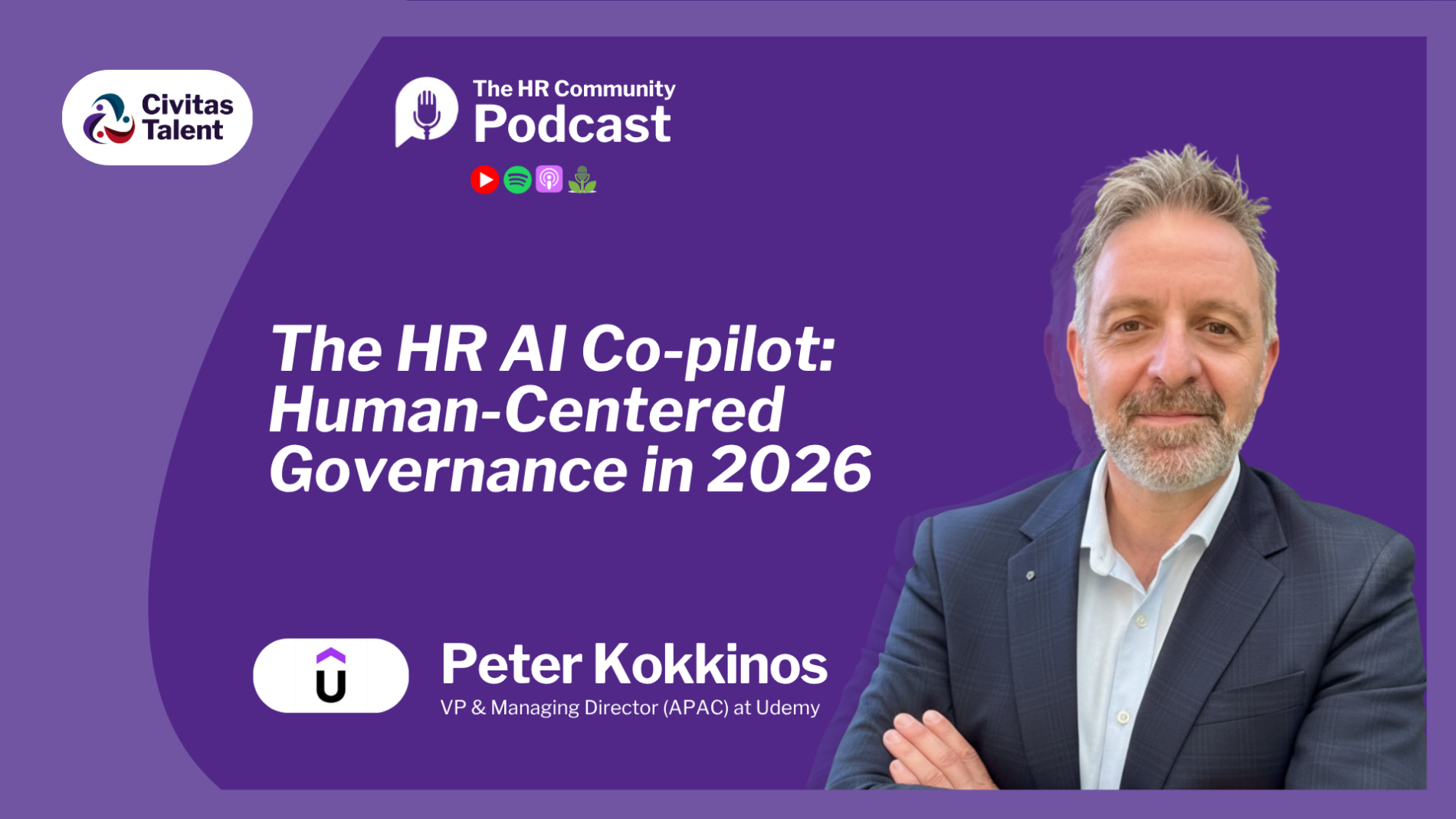
The HR AI Co-pilot: Human-Centered Governance in 2026
In this episode of The HR Community Podcast, host Shane O’Neill sits down with Peter Kokkinos, VP and M...
Unexpected departure of Safety Manager created leadership gap during critical infrastructure project deli...
The organisation was expanding production capacity, increasing workforce size and operational complexity....
Intelligence for high-performing people & safety teams.
We love hearing from you and we’ll get back to you as soon as possible.
Stay ahead of the curve with the latest HR and HSE insights, delivered straight to your inbox.