

Post
25 March 2026
From Filling Roles to Steering Growth: The Strategic Talent Intelligence Era
In the latest episode of The HR Community Podcast, host Shane O’Neill sits down with Kyle Hurley, Senior Manager for Talent Acquisition at Medhealth Group. With over 20 years of experience spanning IT, banking, and global recruitment, Kyle offers a unique, tech-forward perspective on how TA is evolving in 2026. As the leader of a…
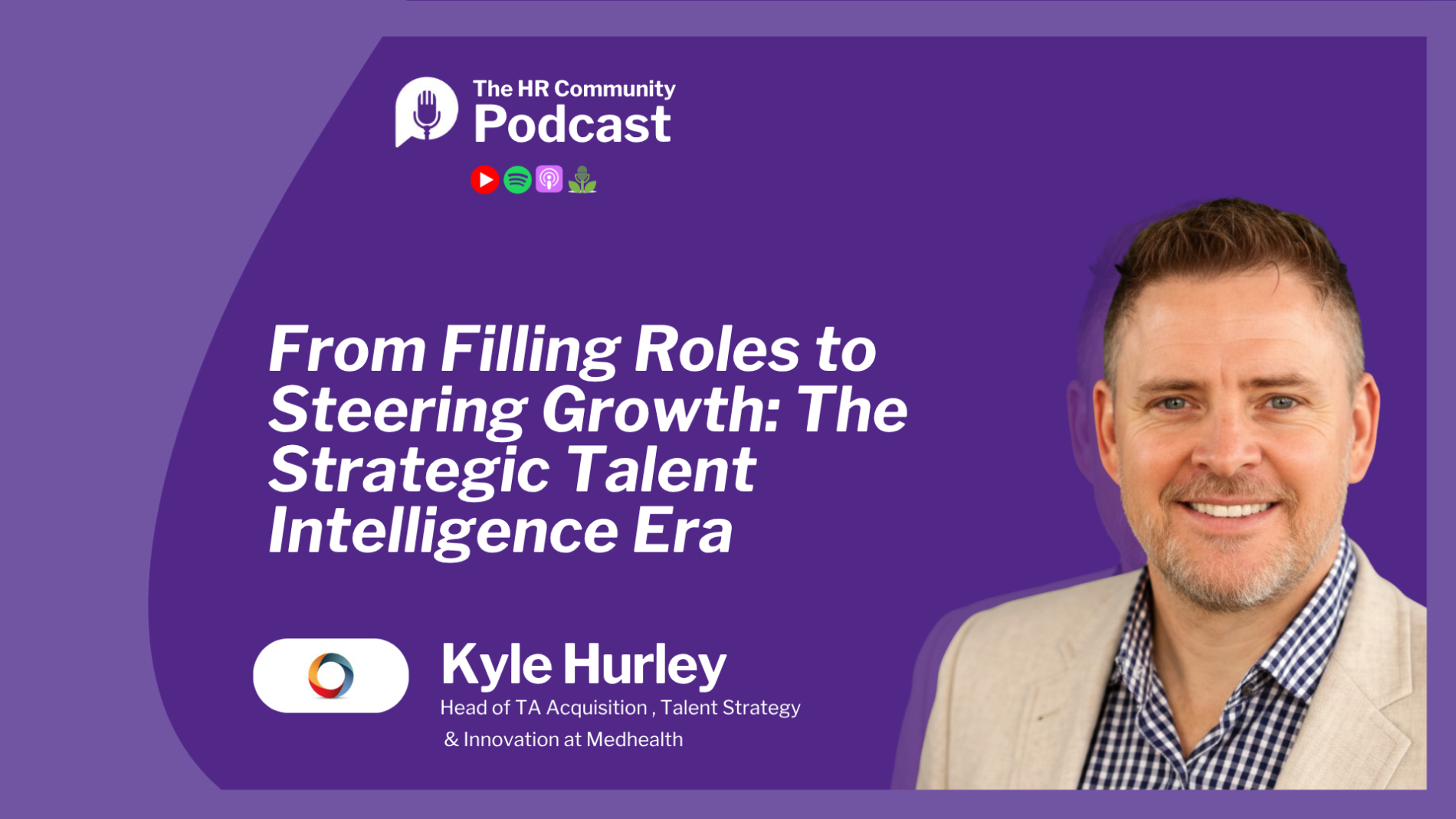
In the latest episode of The HR Community Podcast, host Shane O’Neill sits down with Kyle Hurley, Senior Manager for Talent Acquisition at Medhealth Group. With over 20 years of experience spanning IT, banking, and global recruitment, Kyle offers a unique, tech-forward perspective on how TA is evolving in 2026.
As the leader of a “House of Brands” comprising over 25 unique health and employment services, Kyle’s mission is complex: building a high-volume hiring engine that maintains the distinct “vibe” of dozens of specialized businesses.
The Guest Spotlight: Kyle Hurley
Kyle didn’t take the traditional path to HR. Starting in IT – “cutting code in Turbo Pascal,” as he puts it – he eventually transitioned into recruitment, spending a decade in agencies before moving in-house. This technical foundation has become his “superpower” in an era dominated by AI and data.
At Medhealth, Kyle manages the strategy for 15 core brands, targeting finite talent pools like occupational therapists, psychiatrists, and allied health specialists.
“I didn’t think that my IT qualifications would ever come 360 back around to be more important as they are now… understanding that Java’s not a coffee bean is quite important.”
Key Leadership Insight: The Evolution of TA
The conversation centered on the shift from TA as a “service center” to TA as a “strategic advisor.” Kyle notes that the role of talent acquisition has changed at least five times throughout his career, moving away from “post and pray” methods toward a model of Strategic Talent Intelligence.
1. Beyond “Time to Fill”
Kyle advocates for moving metrics from basic speed to business impact. This involves using data-driven insights to challenge hiring managers and influence long-term business planning.
2. The Recruiter as Consultant
In Kyle’s view, a modern TA team should be the first port of call for market intelligence.
“Businesses come to us for strategic intelligence, market intelligence, talent intelligence, data-driven insights, advice… We’ve moved from just time to fill into impact of hiring.”
3. Managing the “Portfolio Paradox”
How do you centralize 25 brands without losing their soul? Kyle’s blueprint involves:
- Centralized Efficiency: One way of working to gain scale.
- Tailored Branding: Ensuring the “candidate vibe” remains unique to each brand’s culture.
- A Multi-Horizon Roadmap: Building three-year strategies that keep the business aligned with long-term talent goals.
2026 Market Trends: AI and the Human Touch
While many fear AI will replace recruiters, Kyle remains an optimist, viewing technology as an enabler rather than a replacement.
The Rise of AI Governance
As AI becomes more prevalent, Kyle highlights a new required skill set: AI Governance. Recruiters must ensure that the tools they use are compliant and free from the biases that have plagued earlier iterations of AI sourcing.
AI-Assisted Personalization
Medhealth uses technology to automate the “drudge work,” but Kyle insists that the high-stakes nature of career changes requires human empathy.
“We’re definitely not going to be replaced by robots… there’s a huge component of empathy that’s needed. [Moving jobs] are fairly substantial, life-changing, family-orientating, big decisions.”
Predictive Analytics
Kyle points to the power of AI in workforce planning – identifying which internal employees have skills for succession and predicting attrition before it happens.
Practical Takeaways for HR Leaders
- Audit Your Tech Stack: Look for “App Sprawl.” Kyle notes there are over 130 vendor solutions in the recruitment lifecycle; focus on the ones that actually drive efficiency.
- Improve the “Unsuccessful” Experience: Medhealth maintains a 99% NPS for new starters, but Kyle also emphasizes the importance of the brand reputational piece for those who don’t get the job.
- Move to Skills-Based Hiring: Shift away from “musical chairs” recruitment and toward competency frameworks that allow you to “build from within.”
Listen to the Full Episode
Want to hear Kyle’s thoughts on “blitz-scaling” and the future of open-learning certifications?
Can your current executive leadership deliver your next strategic chapter?
Evaluate your C-suite’s alignment, capability gaps, and execution risk ahead of rapid scaling or integration.
Related Post


Government hiring carries a compliance burden most private-sector RPO models are not built for. What a pu...

Seasonal peaks break standard recruitment models. How retail RPO handles volume hiring across a national ...
Intelligence for high-performing people & safety teams.
We love hearing from you and we’ll get back to you as soon as possible.
Stay ahead of the curve with the latest HR and HSE insights, delivered straight to your inbox.